


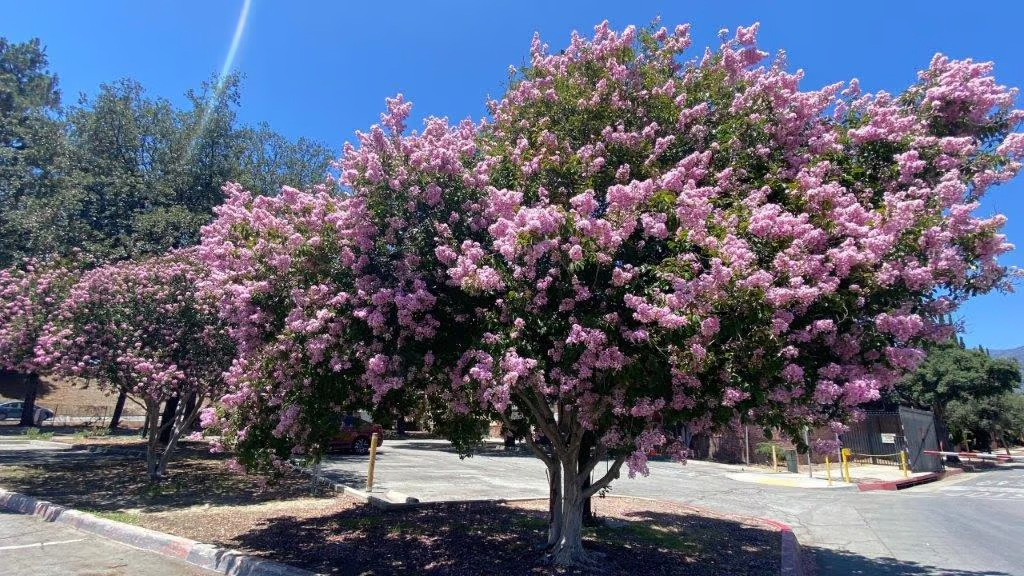
Crape Myrtle
Brief Description
The Crape Myrtle is versatile because it grows as either a shrub or short tree. The flower panicles are gorgeous pink, purple or red (depending on variety) and can bloom from late Spring into Fall. The maintenance is minimal and once established, it requires minimal water. It tree grows 12 to 25 feet tall and 10 to 15 feet wide. The semi-dwarf grows up to 6 feet tall and 6 feet wide, while the dwarf varieties are even shorter and narrower. We love this shrub or bush!
Origin
China, Philippines, Japan
Description
Common Name – Crape Myrtle
Botanical Name – Lagerstroemia Indica
Plant Type – Deciduous
Mature Shrub Size – 9 feet tall and 8 feet wide
Mature Tree Size – 12 feet wide and 25 feet tall
Sun Exposure – Full Sun
Bloom Time – Late Spring into Fall
Flower Color – Pink to Lavender or purplish pink
Hardiness Zone – 6 to 9
Planting
Before planting your Crape Myrtle, consider if you want a shrub or tree, as that will help dictate what your options are. Make sure to find an area that will give it full sun. After it’s in the ground, keep it damp throughout infancy.
Care
There is very little pruning necessary during the growing season unless you see something ‘wild’ or if you want to make it a tree. In case you want a tree, you can trim all but one central branch and that will eventually turn into the tree’s trunk. Prune out 2-3 feet of the Crape Myrtle foliage every Winter and it will promote new growth & thriving flowers. As for watering, pull the emitters out to the base of the canopy because it will force the roots to grow out, thus making it stronger and more drought resistant.
Flowers
The flowers are what sets the Crape Myrtle apart. While the individual flower petals are only 1 to 1 ½ inches in size, they grow on panicles that measure between 6 and 18 inches. Flower colors include pinks, purples, reds and white. It stays in bloom throughout the summer.
Varieties
We love all Crape Myrtle varieties.
Invasive
The Crape Myrtle is not invasive.
For other shrubs that are perfectly suited for Greater Prescott, read about the Nandina here.
Lastly, we highly recommend Watter’s Garden Center, Mortimer Nursery, or Prescott Valley Nursery as great places to both purchase shrubs & trees but to also ask questions because these are the experts.